The result of many cups of coffee and lots of junky foods.
ING is a platform where people can listen to sounds all over the world in real-time, from Los Angeles to Tokyo. Meant to relieve the stressed and satisfy the curious, ING allows people to connect on a different level, providing a new auditory experience.
The presentation:
The final video:

Showing posts with label multimedia experience. Show all posts
Showing posts with label multimedia experience. Show all posts
Tuesday, December 01, 2015

Tuesday, November 17, 2015
Sunday, November 15, 2015
mx: animation progress
Our home page:
(text needs to be edited)
Our browse page:
(text needs to be edited)
(text needs to be edited)
Our browse page:
(text needs to be edited)
Wednesday, November 04, 2015
mx: all screens
After talking with Ian, he gave us some valuable feedback. Generally, he said to keep consistent with our brand (in terms of when we use Futura Bold and Stempel Garamond) and planning out how it will look like in motion.
Some other things he mentioned:
- desktop, profile: fix how the lines are connecting to the tick mark (looks awkward)
- desktop, profile: consider taking out the friends option
- desktop, browse: make a more exaggerated radiating circle
- desktop, browse: show show complicated sounds can be resized (show in animation)
- mobile, browse: fix the layout of how users receive notifications
- mobile, record: figure our how you label/tag recordings & the play button on the bottom seems static
- desktop, sound capsule: design out screens when you find a capsule
Monday, October 26, 2015
mx: script
Ashton and I were thinking about what the story would be for our final product, and we came up with the script below. We originally thought it would be an "advertisement" sort of video, so we had to realign our design to creating a story. We had some trouble in the beginning and the scenes are a bit choppy, but it is still just a first draft:
ING
-browse, the network, profile, play button (3 functions)
Listening to the user’s internal thought world
Woman: Sigh Finally some time to think
Opens ING app on phone, tunes-in on a sound
Woman: I just need to relax
Changes Mood to relax
Woman: I wonder what Tokyo sounds like right now...
Changing Location in Browse Page
Woman: Maybe somewhere in Tokyo where it’s quiet…
Refines location
Woman: Where it’s raining
Refines weather
Woman: I should share this with _____.
Sends sound to friend
Friend sends a sound back
Woman: Cool! I’ll listen to that in a bit
Woman adds sound to her queue
------
Woman checks calendar on mobile and sees that there’s an ING event coming up
She remembers that there’s an event coming up soon, goes to desktop to check when it is, checks calendar on mobile to see if she’s available
Woman: Sweet, it’s today
Sees that it’s tonight and RSVPs to event.
Woman: Well I’m busy until 5, so let’s do after that…
Clicks on RSVP time
------
Woman walks to event and is waiting for the subway, hears a musician
Starts recording
Woman: This makes me think about my trip with ____ to Italy! I’ll send it to her!
Sends recording
Woman: I wonder what the turnout will be
Goes to Connect Page and sees others in her area that are online
Woman: More people showed up than I thought!
-----
Woman arrives at event
She’s listening to the sounds other people are listening to close by (uncontrolled site / sidewalk)
Approaches beacon
Woman: Looks like three other people already chose the categories.
Woman: Let’s see what it’ll sound like if I chose Amsterdam
-----
Woman gets home, changes to sleepy mode
Woman: What a long day...
END
Wednesday, October 21, 2015
Wednesday, October 14, 2015
Monday, October 12, 2015
Tuesday, October 06, 2015
mx: refining the scenario
Garrett's feedback was really helpful, and made us excited about our idea again. We were getting a tired of the project, so adding the spatial element added a fresh perspective. Here are some things Garrett said during our google hangout-crit:
-Make the app more immersive between the experience and the app visual
-Think about how to bring people into the experience
-Match the tone and attitude of your idea with the app
-Emphasize how someone discovers the app
-The list navigation seems boring and not in-line with the idea - think of a new way to navigate
-Think about the spatial elements in relation to the experience (how movement can effect the sound)
-Think about the 2 Modes of Listening: offsite and onsite and how they're different
-Emphasize the sharing experience
-General:
---levels of incentive:
---status: ex. having your name on the side of a plane
---access: accessibility, ex. unlocking parts by where you are
---power: increases your ability
---stuff: lowest level of incentive, giving people objects
Below is our response to Garrett's feedback:


-Make the app more immersive between the experience and the app visual
-Think about how to bring people into the experience
-Match the tone and attitude of your idea with the app
-Emphasize how someone discovers the app
-The list navigation seems boring and not in-line with the idea - think of a new way to navigate
-Think about the spatial elements in relation to the experience (how movement can effect the sound)
-Think about the 2 Modes of Listening: offsite and onsite and how they're different
-Emphasize the sharing experience
-General:
---levels of incentive:
---status: ex. having your name on the side of a plane
---access: accessibility, ex. unlocking parts by where you are
---power: increases your ability
---stuff: lowest level of incentive, giving people objects
Below is our response to Garrett's feedback:

Detail screens:


Sunday, October 04, 2015
mx: scenario 2
Below are some high-content wireframes (not 100% fleshed out) that show the desktop version of -ING. First, the user is in their profile:

The user is going through their sound log:

Afterwards, the user decided to go into the browse tab and explore more sounds:

Selecting mood, the user is about to click "relaxed":

Tuesday, September 29, 2015
mx: final branding + touchpoints
After I did some iterations on the logo, we came up with the final branding below. We wanted it to be functional and also very simple, to speak to our specific audience. At the same time, we don't want it to feel corporate or too formal, because Gen-Xers tend to be skeptical of authority and prioritize informality.
BRANDING

Below are three touchpoints for mobile. Ashton and I decided to design out what the screen will look like when listening to a sound, exploring/browsing a sound, and recording a sound. We had to think about what would best suit our audience, as well as be more reliant on sound rather than imagery. This is why our wireframes do not include direct imagery, but instead encourage audio.
TOUCHPOINTS


Monday, September 28, 2015
mx: more brand exploration
We narrowed down our color palette to two schemes (yea, we like that blueish green):


Below are some logotypes with color. Our focus is simplicity and functionality. There are some application uses included as well for a couple of the logotypes.

Here are some logo explorations, with geometric shapes.

mx: brand exploration
In order to speak to our audience (Gen-Xers and young adults from 18-40 years old), we wanted to create a logotype that was simple, direct and humanistic. According to our research, people of this age group are most drawn to simple and functional design. Below are a couple of names we were thinking about using, and also some typeface exploration. At the bottom is possible color palettes.


After crit, Ashton and I decided to go with the name –ING. Though I thought of it randomly, we realized later the strong conceptual aspect to it. Some people during crit gave us some good ideas, where we could attach –ING to other words, which would solidify our branding. We did not settle on a color palette, but we narrowed it down to two.
Wednesday, September 23, 2015
Sunday, September 20, 2015
mx: refined concept
We got some good feedback the other day after presenting our idea, and have come up with some alternatives.
Here is a list of things that were problematic with our idea:
REFINED IDEA
Main Objective:
How can we create a platform where people can share experiences and connect with people in a more intimate way, while also providing therapeutic effects, which social media now cannot satisfy?
Audience:
18-40 year old women
Young people and Gen-Xers
Concept:
We are creating a platform similar to a radio station where one can tune-in with a bluetooth device. The device can simultaneously record sounds and also broadcast sounds in real-time, letting the user listen in on other people's surroundings as well as record where they are at. Some filtering options we will provide are:
Location (Country, City)
Terrain (Ex. Beach, forest)
Weather (Rainy, sunny, snow)
Mood (from white noise to a bustling city)
Random
The focus in this project is sound, not visuals. The player will be blank, letting the user fully immerse themselves into the sound. Users will also be able to see/share sounds with close friends and family. The third platform will be a monthly event where users will meet up at specified locations to listen to sounds together, in real-time. One example would be in a movie theater, where we would rent out a room, not to watch a movie, but to listen to, say, a beach in California.
1st Platform - Mobile (main focus - more active participation of the user, multi-tasking on the go)
2nd Platform - Desktop (more of a way to unwind - able to explore more, play, things that require more time)
3rd Platform - Spatial Experience (more of a community effort - goes back to listening/experiencing things with other people, sharing an experience)
Here is a list of things that were problematic with our idea:
- what the sound player would look like
- possibly a blank screen, a screen saver, images
- either if looking at the track itself (soundwaves)
- possibility of a GPS location
- length of the sound clips
- being able to tell if other people in the are are listening
- and also their sounds
- issue of privacy
- a filtering system for sounds
- are they going to be sorted by location/duration/mood
- make the sound listening in real-time more intimate
- possibilities for third platform
- possibly having it in a movie theater - just sound
- having a dark room, being able to control the sound with an app
- using beacons - being able to control the sound in certain areas (that are closest to the beacon) --> will have multiple sounds playing in one area
- differentiating the platform with existing social media
- making it truly a different form of experience/communication
REFINED IDEA
Main Objective:
How can we create a platform where people can share experiences and connect with people in a more intimate way, while also providing therapeutic effects, which social media now cannot satisfy?
Audience:
18-40 year old women
Young people and Gen-Xers
Concept:
We are creating a platform similar to a radio station where one can tune-in with a bluetooth device. The device can simultaneously record sounds and also broadcast sounds in real-time, letting the user listen in on other people's surroundings as well as record where they are at. Some filtering options we will provide are:
Location (Country, City)
Terrain (Ex. Beach, forest)
Weather (Rainy, sunny, snow)
Mood (from white noise to a bustling city)
Random
The focus in this project is sound, not visuals. The player will be blank, letting the user fully immerse themselves into the sound. Users will also be able to see/share sounds with close friends and family. The third platform will be a monthly event where users will meet up at specified locations to listen to sounds together, in real-time. One example would be in a movie theater, where we would rent out a room, not to watch a movie, but to listen to, say, a beach in California.
1st Platform - Mobile (main focus - more active participation of the user, multi-tasking on the go)
2nd Platform - Desktop (more of a way to unwind - able to explore more, play, things that require more time)
3rd Platform - Spatial Experience (more of a community effort - goes back to listening/experiencing things with other people, sharing an experience)
Wednesday, September 16, 2015

Saturday, September 05, 2015
mx: 15 activity scenarios
Here are 15 features that speak to our audience:
- Problem 1: Lack of control over what you're listening to
- Solution: Being able to "create" your own sounds by overlapping sounds from different locations
- Example: Someone in New York is listening to the streets of Beijing, a forest in Colorado, etc. all at one time
- Problem 2: The device may be intrusive/distracting from daily life
- Solution: Making the device small, discreet
- Example: A lawyer while working at his/her office wants to tune in on the device, but doesn't want to seem distracted
- Problem 3: A lack of an outlet for stress/anxiety/fatigue/business
- Solution: Being able to only hear certain types of sounds of their choice based on mood
- Example: A teacher who is drawn towards natural sounds wants to relax and zone out, so listens to sounds of the beach during his/her lunch break
- Problem 4: A long-distance relationship seeking for an authentic way to connect to share an experience
- Solution: Being able to broadcast in real-time and share sounds they collected/recorded throughout their day
- Example: One friend in Hawaii wants to connect with their friend in Kansas City, so they share their sound log for the day
- Problem 5: Feeling disconnected from other listeners
- Solution: Listener feedback - a tracker of the number of those tuning in
- Example: Being able to compile sounds together and knowing somebody borrowed your sound (similar to Pinterest)
- Problem 6: Not being able to listen to sounds in large spaces
- Solution: A speaker which broadcasts the sound in the whole space
- Example: A mom getting ready for work in a rural town and wants to listen to the sounds of a bustling city
- Problem 7: Not knowing what you want to listen to
- Solution: A selection of certain areas/locations that match the user's mood with a short questionnaire
- Example: The user wants a way to pinpoint their emotional state, so fills out a short questionnaire about how they're feeling and the device prompts them to suggested sounds
- Problem 8: Not being able to connect with people internationally
- Solution: Qualities of the device change according to each person's needs/preferred look & feel in different countries
- Example: In America, the device would be geared towards their aesthetic and would differ from that of Japan
- Problem 9: Not being able to know for sure if the sound is real/authentic
- Solution: Having the option to actually talk with another listener
- Example: A user overhears a song they like in Hong Kong and wants to ask the other user what song it is through clicking a "Let's Chat" button
- Problem 10: Not being made of sustainable materials - looking too high tech
- Solution: Make the product out of something recycled, sustainable
- Example: The device can be attached to pre-existing headphones/earphones/tech or be made out of recycled plastic/wood
- Problem 11: Since the device will be small, it can be easily lost, dislocated
- Solution: The device is trackable, and connects to other technology
- Example: Someone loses their device, and tracks it down with their iPhone
- Problem 12: The issue of privacy
- Solution: The device can differentiate between voice and ambience
- Example: Somebody's riding the bus and wants to capture the sounds the bus is making, not the conversations going on around them
- Problem 13: People wanting to customize their device
- Solution: The device comes in different colors/materials and the application has different default states for different moods/states (working, relaxing, sleeping)
- Example: Someone is relaxing and they open the app and according to their state, the device plays relaxing sounds
- Problem 14: The discrepancy between what sounds are played and the person's current state
- Solution: The device can track a person's heartbeat in order to cater to their sound needs
- Example: Someone is running late to work, and finally arrives at their destination, so needs to recuperate - so the device plays music to rest their heartbeat
- Problem 15: The device cannot be used for different purposes (research)
- Solution: The app gives the user facts about the location and culture through making its own infographs
- Example: Someone is researching about New York, and wants to know who is listening in in New York
TWO SCENARIOS
the device can be customizable in all senses of the term, so one can choose the look and also filter the sounds by emotion/location or receive a random sound in real-time
the device also will not intrude on everyday life, but will be fluidly assimilated into it through its appearance and size – it will be small and portable
SITEMAP

Tuesday, September 01, 2015
mx: +research & 15 ideas
Ashton and I rephrased our problem into a question during class:
Problem Statement
How can we create a platform where people can share experiences and connect with people in a more authentic way, while also providing potential therapeutic effects, which social media now cannot satisfy/fails to do?
Audience
Those in their 20s to 50s. Particularly those who:
1. Desire Authenticity
2. Embraces Connectivity
3. Need an outlet for stress/anxiety
After we talked with Emmy in class the other day, Ashton and I decided to break up the problem into separate parts. Since we started with an idea/solution first, we have to backtrack and modify our idea along the way. This is what we came up with over the weekend:


This is how we're breaking up the research:
- how sound effects emotion
- the need for authenticity
- social media today – pros and cons
- how sound effects emotion
- "there is a second auditory expressive behavior we humans carry out – our bodily movements themselves. Human movement has been conjectured to underlie music as far back as the Greeks. As a hypothesis this has the advantage that we have auditory systems capable of making sense of the sounds of people moving in our midst – an angry stomper approaching, a delicate lilter passing, and so on. Some of these movements trigger positive emotions – they conjure up images of pleasant activities – while others might be automatically associated with fear or anxiety. (The sound of running makes us wonder what we’re running from.)"
- "As evidence that humans are the principal source of emotionality among human artifacts, consider human visual signs. Visual signs, I have argued, have culturally evolved to look like natural objects, and have the kinds of contour combinations found in a three-dimensional world of opaque objects. Three-dimensional world of opaque objects? Nothing particularly human about that, and that’s why most linguistic signs – like the letters and words on this page – are not emotionally evocative to look at."
- "It’s only recently that technology has enabled us to delve into the depths of the human brain and into the depths of the ocean. With those advancements our ability to study and understand the human mind has expanded to include a stream of new ideas about perception, emotions, empathy, creativity, health and healing, and our relationship with water....People’s responses to any kind of stimulus, including advertising, include conscious activity—things we can verbalize—and subconscious activity,” he once wrote. “But the subconscious responses can’t be tracked through traditional market research methods.” When groups of neurons are activated in the brain by any kind of stimulus — a picture, a sound, a smell, touch, taste, pain, pleasure, or emotion—a small electrical charge is generated, which indicates that neurological functions such as memory, attention, language processing, and emotion are taking place in the cortex" (http://www.salon.com/2014/07/
19/why_our_brains_love_the_ ocean_science_explains_what_ draws_humans_to_the_sea/) - "Emotions are closely linked to perception and very often our emotional response really helps us deal with reality,"This study found that emotional learning on hearing response is found in the the auditory cortex which is known as the area that is responsible for auditory plasticity."Our hypothesis is that the amygdala and cortex are modifying subcortical auditory processing areas. The sensory cortex is responsible for the changes in frequency discrimination, but it’s not necessary for developing specialized or generalized emotional responses. So it’s kind of a puzzle.” (http://www.uphs.upenn.edu/
news/news_releases/2013/06/ geffen/) - the need for authenticity
- Authenticity is a indicator of credibility, trustworthiness, and accuracy. While fulfilling the promises made to the consumer, authenticity also enforces trust between the producer and consumer, as well as strengthens relationships between the consumers themselves. In regards to social media, people want "authentic interaction" where they can hear/see your personal voice. As social media allows for constant documentation, customers should feel involved in the whole "customer journey" from "initial awareness to total engagement." Transparency is key in this aspect. (http://www.socialmediatoday.com/content/how-brands-should-show-their-authentic-voice-social-media)
- Still, ad campaigns in the past took advantage of the desire for authenticity and superficially created the same effect with "vintage" design, harkening back to the past though not actually coming from that time period. In actuality, 66% of customers feel that the transaction between consumers and manufacturers are one-sided. At the same time, 70% of customers feel that brands only seek to increase their profit. (http://trendwatching.com/trends/10-trends-for-2015/)
- There is a trend of the longing for 'real' as "more and more aspects of life become fake or artificial." This is especially seen in those considered part of Generation X (34-54 year olds). These people are attracted more to "real-world situations and authenticity," and are also more drawn to advertising which seems more calm and safe. Young enough to be technologically savvy and known to be loyal to their chosen brands, Generation X is viewed as a "must-know for marketers." (http://www.nielsen.com/us/en/insights/news/2012/reaching-generation-x-authenticity-in-advertising.html)
- An interesting tidbit about authenticity and marketing:
- "This drive for authenticity is perhaps the biggest challenge facing the marketing industry. Despite the fact that, to a large extent, advertising is still focused on creating the right image via traditional channels, consumers are demanding something more tangible."
- See more in previous blog post: http://mary-lim.blogspot.com/2015/08/mx-community-focus.html
- pros and cons of social media today
- While researching on this topic, I found many contradicting articles about the impact of social media. Overall, social media seems to have a slightly more negative impact on society due to a couple of reasons. Though social media allows for more connectivity through keeping up with friends, it provides an "illusion of companionship without the demands of intimacy." There also seems to be a decrease in the simple act of making eye contact between children and their parents. Despite the common misconception that social media is used to contact across large distances, this is not the case. More people use the internet for local contact. The internet also actually promotes engagement to public spaces such as "parks, libraries, community centers..." (http://www.pewinternet.org/2009/11/04/social-isolation-and-new-technology/)
- Still, there are blaring cons: social networking sites is correlated with "personality and brain disorders, the inability to have in-person conversations, a need for instant gratification, and self-centered personalities, as well as addictive behaviors." Heavy internet use is known to be associated with depression, loneliness and anxiety. Needless to say, more time spent on social media decreases the interaction time face-to-face. Another aspect of social media is its tendency to isolate people and actually "exacerbate feelings of disconnect). (http://www.apa.org/monitor/2011/06/social-networking.aspx)
- On the other hand, some say social media allows for people to improve their relationships and make new friends. (http://socialnetworking.procon.org/)
15 IDEAS
DIGITAL MOOD BOARD OF CHOSEN COMMUNITY
I found a really helpful sight in designing for generation x:
http://www.theurbandeveloper.com/wp-content/uploads/space.jpg
logo design preferences for gen x:
according to this website, words that describe gen x are:
individualistic, entrepreneurial, materialistic, hedonistic
gen x' also tend to like symmetrical design, and prefer a naturalistic style (freehand) rather than graphic (mechanical)
http://lib.dr.iastate.edu/cgi/viewcontent.cgi?article=3159&context=etd
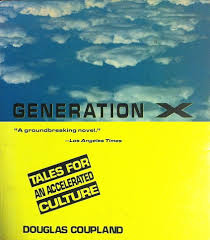
People in this age group (gen x & y) like clean and simple design. They also prioritize functionality and embrace technology. Another factor that comes into designing for this community is its uniqueness. Below are some images that I think embodies our demographic:


- app that reveals the origin of the object – ex. cell phone --> landline
- app that turns off all electronics at once
- a platform to swap skills – ex. one person who knows how to do calligraphy teaches another person who knows how to snowboard, while the calligrapher learns how to snowboard.
- a device where you can make whatever you want on a website that can be printed out (3D)
- a visualization of what social media would be like if it existed in form/space
- being able to hear sounds in real-time that are only from natural landscapes (for people who need a stress reliever)
- being able to hear different weather patterns in chosen locations
- radio station where you can tune in on a different location
- a way to journal your idea with sound, a sound journal
- a place to collect different people's laughs
- hearing short tidbits in real-time internationally that are temporary
- connecting sound and smell to create a new experience
- being able simultaneously listen to chosen locations at once
- networking through sound - being able to share sounds
- a platform to be able to schedule meets to listen to one sound all at once with many people
DIGITAL MOOD BOARD OF CHOSEN COMMUNITY
I found a really helpful sight in designing for generation x:
http://www.theurbandeveloper.com/wp-content/uploads/space.jpg
logo design preferences for gen x:
according to this website, words that describe gen x are:
individualistic, entrepreneurial, materialistic, hedonistic
gen x' also tend to like symmetrical design, and prefer a naturalistic style (freehand) rather than graphic (mechanical)
http://lib.dr.iastate.edu/cgi/viewcontent.cgi?article=3159&context=etd
People in this age group (gen x & y) like clean and simple design. They also prioritize functionality and embrace technology. Another factor that comes into designing for this community is its uniqueness. Below are some images that I think embodies our demographic:


Monday, August 31, 2015
mx: community focus
Research
https://books.google.com/books?id=WaaFpaRWzoYC&pg=PA93&lpg=PA93&dq=the+need+for+authenticity&source=bl&ots=qLGT4n6dee&sig=miej_XWBmVtAtgVY5fccpSgPfzk&hl=en&sa=X&ved=0CDUQ6AEwBGoVChMI6tPS7J3TxwIVgl6SCh2VpgFT#v=onepage&q=the%20need%20for%20authenticity&f=false
Available Tech
Earin – "The World's Smallest Earphone Buds"


The Need for Authenticity
"Ad campaigns in the past have attempted to create a sense of authenticity in ways that ultimately devalued “the venerable principles they were meant to reflect. And ‘authentic’ morphed into ‘inspired by authentic things’ — in other words, things that are blatantly inauthentic, like ‘vintage’ rock T-shirts.” So argues Linda Ong, president of Truth Consulting, in a recent AdAge article. As she notes, this sort of faux-realism just comes across as pandering now; like a knock-off of the genuine article.
Ong suggests that a company “needs to understand the culture. …Culture, like a brand, is a living, breathing ecosystem that requires constant monitoring and evaluation as it adapts and changes. When your brand is able to answer “Why now?” at any point in time, you’ll be positioned to be a relevant, authentic and influential part of the culture.” Responding to the market’s desires authentically requires a deep knowledge of culture and of self (in the corporate sense). Only then can you and your team seize the opportunities in the marketplace for carrying out your corporate mission authentically."http://www.mtomconsulting.com/speak-language-millennials-personal-branding-need-authenticity/
Successful social media marketing is about authentic interaction that inspires advocacy for your products and services, yielding trusted recommendations that are more effective than other forms of advertising. This is true whatever the size of your business.http://www.theguardian.com/technology/2013/aug/12/engage-dont-broadcast-the-need-for-authenticity-in-social-media
How, then, do you win authentic advocates? Genuine and meaningful responses on social media are a great start, albeit with significant implications for how communications are organised internally. In other initiatives, there can be a fine line between positive interaction and going too far in enticing influencers.
The impulse towards self-improvement is deep-rooted, but too often there's a chasm between aspiration and reality. Set that chasm against the fact that 66% of consumers feel that the value exchange between consumers and brands is one-sided. Meanwhile, 70% feel that brands are motivated by a self-centered desire to increase profits rather than by a sincere commitment to their customers (Edelman, October 2014). In 2015, smart brands will look to flip that picture. Here's one approach, build your inevitable 'what to do with wearables in 2015' discussion around how wearable devices (and smartphones) can enable your customers to earn CURRENCIES OF CHANGE: personalised rewards*, incentives and discounts that help them overcome the inconvenience, cost or just the oh-so-human inertia that so often prevents self-improvement.
Some societal trends are caused by a single disruptive event (like 9/11), person (like Barack Obama) or technology (like the mobile phone). Other trends develop over the years – like a longing for ‘real’, as more and more aspects of life become fake or artificial. Most trends are interrelated and therefore overlap with others.http://www.trendsactive.com/#!/our-trends/societal-trends/
https://books.google.com/books?id=WaaFpaRWzoYC&pg=PA93&lpg=PA93&dq=the+need+for+authenticity&source=bl&ots=qLGT4n6dee&sig=miej_XWBmVtAtgVY5fccpSgPfzk&hl=en&sa=X&ved=0CDUQ6AEwBGoVChMI6tPS7J3TxwIVgl6SCh2VpgFT#v=onepage&q=the%20need%20for%20authenticity&f=false
Although a smaller population than Boomers and Millenials, Gen X’s tendency toward affluence, technological savvy and brand loyalty make them unique characters in the marketplace. Generation X’s buying potential makes this demographic of consumers aged 35 to 54 a must-know for marketers.So what makes Gen Xers tick when it comes to TV advertising? New research from Nielsen shows that both men and women in this demo connect with everyday household and family activities. Unlike other demographics, such as Millenials, real-world situations and authenticity appeal most to consumers between 35-54.http://www.nielsen.com/us/en/insights/news/2012/reaching-generation-x-authenticity-in-advertising.html
Available Tech
Earin – "The World's Smallest Earphone Buds"


Sunday, August 30, 2015
mx: community psychology
Sense of Community: A Definition and Theory by David W. McMillan and David M. Chavis
Notes
Notes
- Initial studies in the area of sense of community
- Bachrach and Zautra's 7 items (feeling at home, satisfaction, agreement with beliefs, feeling of belonging, interest in what goes on, feeling an important part of, attachment to...)
- Glynn's recognition of discrepancies between real/ideal levels of sense of community
- Riger and Lavrakas' emphasis of the emotional aspect of experience
- These studies revealed that sense of community does exist, but otherwise had limitations on the definition of communities
- A Definition and Theory of Sense of Community
- territorial (neighborhoods) and relational communities (professional, spiritual)
- criteria for a definition of sense of community
- explicit, concrete parts, imply warmth and intimacy, provide a dynamic description of the development/maintenance of the experience
- membership (membership, influence, integration & fulfillment of needs, shared emotional connection
- Membership
- feeling of belonging
- exclusive - creates boundaries for protection and privacy
- deviants are pointed out, rejected to create boundaries
- ex. banishment of Anne Hutchinson as heretic 1637
- boundaries create...
- emotional safety - provides structure, like gangs
- sense of belonging and identification - feeling of acceptance by the group
- personal investment - earning your place, like hazing rituals of college fraternities
- common symbol system - ex. clenched fist for Black Power
- Influence
- member has to have some influence over the group & the group's ability to influence its members work simultaneously; cohesiveness and conformity
- the force toward uniformity is transactional: validating its members and also creating group norms
- Integration & Fulfillment of Needs
- reinforcement
- shared values creates a hierarchy of needs
- Shared Emotional Connection
- based partly on a shared history
- the more they interact, more close
- more positive experiences, greater bond
- resolved tasks and solid interaction
- amount of investment
- reward and humiliation
- spiritual bond
- How the four elements work together

- Dynamics Within the Elements
- membership
- boundaries provide protection = intimacy, emotional safety --> emotional safety makes people feel like they have a place, making them personally invested --> personal investment makes them feel like they belong --> reinforced by a common symbol system, which creates boundaries
- influence
- community influence on the member allows an individual to have more influence in the community
- resistance or dominance causes one to be less influential
- conformity and consensual validation
- integration and fulfillment of needs
- communities organize around needs, people join communities where they needs are met
- mutual rewards
- shared emotional connection
- Dynamics Among the Elements
- The University
- The Neighborhood
- The Youth Gang
- The Kibbutz

Response
This reading made me realize the complexity of communities, and how many factors come into play. Most often times than not, communities are about the interchanging, simultaneous relationships between the individual and the group itself. While communities are beneficial to all and necessary to thrive, the one downside to it is its natural creation of boundaries. At times, this may involve division by race, socio-economic status, etc. that people use to single out other households that do not conform to the group. Communities should be stable and provide security, but at the same time be flexible to change. They should also have leaders who can account for all the members, but does not dominate over the members. These sorts of interconnected parts that create a community need to all be balanced and in harmony in order for an individual to feel like a part of a community.
Subscribe to:
Posts (Atom)